
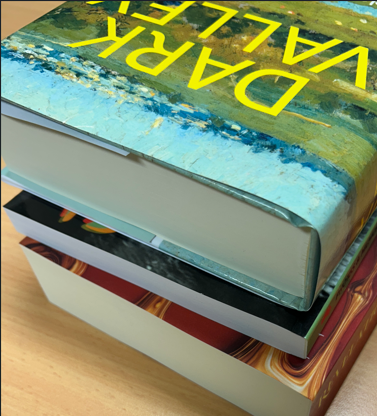
Perfect bound books – hardcase, with dustjacket (top) and softback (2 below)
A highly effective way of binding a book is perfect binding. It’s called perfect binding because it produces a very neatly bound book which displays a very sharp book block and a very neat spine. It’s called ‘perfect’ mainly because the book block is precision guillotined on all four sides – all the individual pages aligning perfectly. The image adjacent shows three perfect bound books and it can been seen to be a very good binding technique. Note that perfect binding can be used for paperback and also hardback books.
This method is also referred to as unsewn binding. Sewn binding, Smyth sewing or section sewn binding is most commonly used in high volume books or prestige low volume books and features sections (in multiples of four pages), Non-contiguous pages are printed on a single sheet and looped through the book to produce a contiguous order. For example page 148 and page 157 are printed side by side and assembled into a section (with other side-by- side printed pages).These sections are then sewn together.
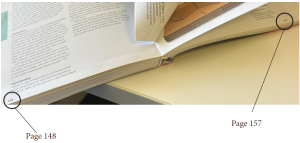
Pages 148 and 157 printed on the same sheet of paper and sewn in sections
There are two methods of prefect binding using two different adhesive types:
- Polyurethane reactive (PUR)
- Ethylene-vinyl acetate (EVA)
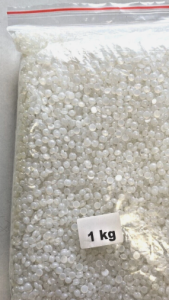
EVA hot melt glue granules
There has long been a debate among industry professionals regarding which method is best. For some its a cost issue with EVA binding being the cheapest method. Many small printers use EVA because it does not spoil. If doing a print run of say 200 copies of a perfect bound book, it might be the only book printing job they have for that day, EVA is used because a small quantity can be heated for application.
When PUR binding was first introduced, industry professionals debated over the merits of PUR vs. EVA glue. These days, PUR is generally recognised as the superior binding process. However, there are times when EVA is a more appropriate choice. Both binding processes are very similar. The main difference between the two is the type of glue used to hold the book together (hence the PUR vs. EVA glue debate).
EVA vs. PUR glue
Polyurethane (PUR) is a material that reacts to air, in particular drawing moisture from the air. When applied to a book block, reacting to the air, it begins to cure. In contrast EVA is heat reactive explaining the term hotmelt glue. When it cools it cures, sometimes in just a few seconds. PUR glue cures more slowly than EVA. While PUR glue bonds strongly, often PUR bound books that come straight from the binding machine should not be opened immediately.
EVA is an ethylene vinyl acetate, or “hot melt,” adhesive. which keeps a solid form at room temperature. EVA’s have a fast curing time and a longer shelf life in the printer’s factory.
PUR bond strength can be as much as 50% greater than EVA once the adhesive application has fully set.
EVA v PUR:
- EVA is cheaper
- PUR is stronger and more flexible
- PUR will not react under temperature extremes. EVA adhesives can become brittle and crack in very cold temperatures
- PUR can be applied thinner making it more flexible and neater in appearance
- PUR glued books may open flatter because of the more flexible nature of the glue.
A final note…
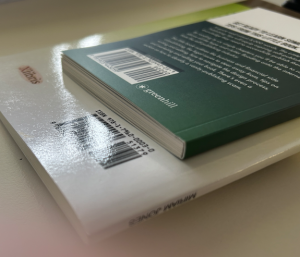
Sloppy Xlibis book binding (bottom) and the alternative sharp looking Green Hill book (top)
With perfect binding its not just about the glue. Here we have a book produced by Xlibris and despite the PUR glue used it’s a very sloppy production – very rounded, very irregular.
While using EVA glue, the Green Hill book is precisely put together and is a superior aesthetic result with a chiselled sharp square spine. The Green Hill book is much cheaper to produce and is given away to their potential clients, so the cheaper glue is a sensible business decision.
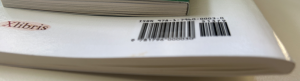
A terribly sloppy binding job with PUR glue.
A comparison of a book with PUR glue and EVA glue is shown here. You’ll see the flatter opening of the PUR bound book.
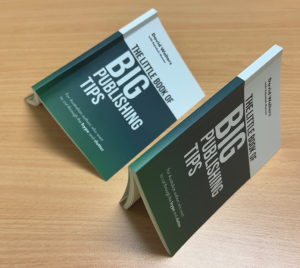
Same book, different glue: EVA glue (right) PUR glue (left)

