
Embellishments are extra enhancements designed to increase a book’s perceived value. Embellishments are usually non-functional or decorative, meaning they are included only to enhance the aesthetics of a book or to make the book look nicer. Often embellishments aren’t only about the ‘look’ – they can be sensory e.g. using paper, lamination and binding to improve reader experience. Or they can even be olfactory.
1. Coatings & Laminations
Matte Lamination – A smooth, non-glossy finish that creates a refined, understated look.
Gloss Lamination – A high-shine finish that enhances colour vibrancy and contrast.
Soft-Touch / Velvet Lamination – A matte coating with a luxurious, velvety or suede-like feel.
Textured / Rough Lamination – A tactile matte surface with a slightly gritty feel, similar to fine sandpaper.
Acrylic Varnish – printed in-line on the printing press (after other colours have been printed). These varnishes come in matt, satin and gloss finishes and can cover the whole page or used just in ‘spots’ .
Spot UV Coating – A clear, glossy coating applied to selected design elements (such as titles or logos) to create contrast against a matte background. Cured through ultra violet light.
Aqueous Coating (AC) – a waters based alternative to acrylic varnish that is more suer freindly.
Raised Spot UV / Scodix – A dimensional, high-gloss coating that builds height to produce a noticeable 3D texture. This varnish can look identical to Spot UV but can also look strikingly different.
Glitter or Pearlescent Coating – A specialty finish containing metallic or reflective particles for a shimmering effect.
2. Structural Enhancements
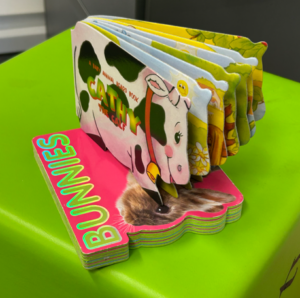
Die cutting on board books
Embossing – Raising a design from the surface to create a tactile, three-dimensional effect.
Debossing – Pressing a design into the cover to create a recessed (indented) impression.
Die-Cutting – Cutting shapes into the cover or pages to form windows or decorative patterns.
Rounded Corners – Trimming corners with a radius cut for a softer appearance and improved durability.
3. Metallic & Specialty Ink Finishes
Foil Stamping (Hot or Cold Foil) – Applying metallic or coloured foil (gold, silver, copper, holographic, etc.) using heat and pressure.
Digital Foiling – A more economical and precise alternative to traditional foil stamping, often suitable for short runs.
Raised Foil – Combining foil stamping with embossing to achieve a raised metallic effect.
Metallic Inks – Printing with silver or gold inks to create a subtle sheen without the higher cost of foil.
4. Binding & Internal Features
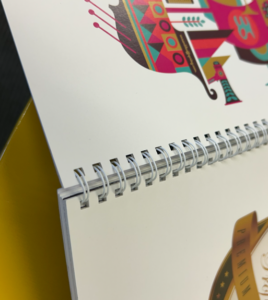
Wiro binding
Ribbon Markers – A fabric ribbon sewn into the spine of a hardcover book for bookmarking.
Head and Tail Bands – Purely decorative coloured cloth strips added to the top and bottom of the spine. These are deigned to hide the signatures in sewn binding or the glue in glueded binding.
Custom Endpapers – Coloured, patterned, or premium papers used to attach the cover to the book block.
Sprayed or Gilded Edges – Applying colour, metallic finish, or printed designs to the edges of the text block.
Section-Sewn Binding – A durable binding method that allows the book to lay flat and improves longevity.
Wiro / Spiral Binding – A lay-flat binding often used for manuals, planners, and cookbooks.
Slipcase – A rigid, usually decorated case that houses the book adding protection.
5. Other Specialty Effects
This list is growing as new technologies develop. Book designers need to use these with care because they can be perceived a gimmicky.
Scented Inks – Specialty inks that release fragrance when rubbed.
Thermochromic Ink – Ink that changes appearance based on temperature.